
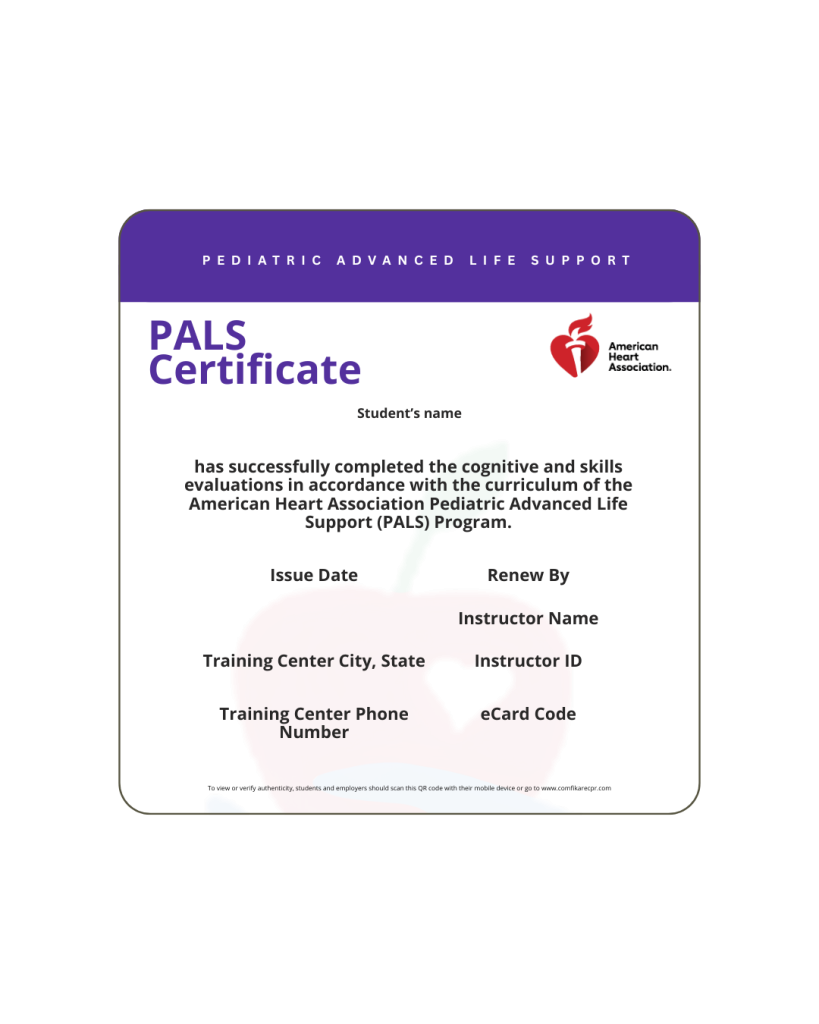
Pediatric Advanced Life Support (PALS) prepares healthcare providers to recognize and treat infants and children in respiratory distress or failure, shock, and cardiac arrest.
For healthcare providers and trained responders focusing on:
Key skills covered in this course:
The course builds on BLS skills and provides hands-on training to help you act quickly and effectively when a child’s life is at risk.
PALS certification shows you’re ready to lead or support pediatric resuscitation in hospitals, clinics, or prehospital settings.
Earning your PALS certificate gives you the confidence to respond fast and make critical decisions when every second matters.
If your current PALS card is nearing expiration, it’s time to refresh your pediatric response skills so you stay current with employer and licensing requirements.
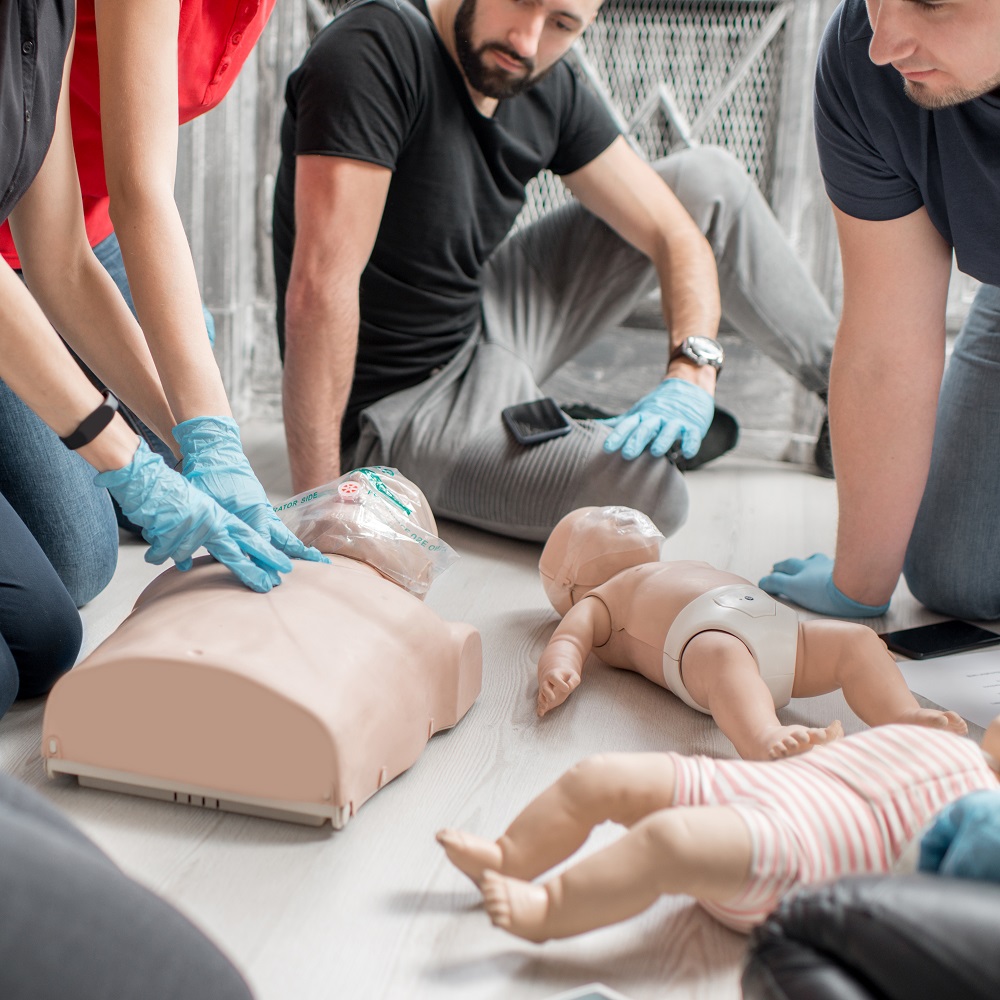
Our recertification class is led by an experienced PALS instructor who focuses on safety while reviewing the latest AHA updates and sharpening core skills through hands-on practice and realistic pediatric scenarios.

You’ll complete a written exam and skills check covering the Pediatric Assessment Triangle and systematic approach, airway and ventilation, CPR/AED for infants and children, rhythm recognition with defibrillation/synchronized cardioversion, IO/IV access and weight-based medications, shock management, and post–cardiac arrest care.
Upon successful completion, you’ll receive a new AHA PALS eCard valid for two years—ready for use in ED, PICU, EMS transport, and urgent care settings.
Our PALS course is reliable and fairly priced. Initial certification PALS: $230. Renewal: $195. Your fee includes instructor-led training, the official AHA exam, and all required materials. No hidden fees—just straightforward instruction that gets you ready to earn your PALS card with confidence.
Official AHA PALS certification (BLS, ACLS & Heartsaver also offered)
Certification
Renewal
5-hour, in-person PALS class at our Silver Spring training center
Certification
Renewal
Pediatric assessment & care: airway management, shock, respiratory failure, rhythm/medication algorithms
Certification
Renewal
HeartCode PALS skills session available
Certification
Renewal
Clear pricing—no surprises at checkout
Certification
Renewal
Official AHA eCard issued after you pass (valid 2 years); weekday & weekend dates
Certification
Renewal
Pediatric Nurses
Respiratory Therapists
Pediatricians
EMS Providers
ED Nurses


EXCELLENTTrustindex verifies that the original source of the review is Google. Good and reliablePosted on GoogleTrustindex verifies that the original source of the review is Google. Orville was an awesome instructor. I feel confident in my CPR abilities after attending his class. I will definitely come here again when it is time to renew.Posted on GoogleTrustindex verifies that the original source of the review is Google. The BLS course I took with Comfi-Kare CPR was fantastic! The professors made the class interesting and simple to understand, plus they were highly competent and informed. I felt confidence in my abilities after the great practical practice. I strongly suggest Comfi-Kare CPR to anyone searching for an excellent BLS course!Posted on GoogleTrustindex verifies that the original source of the review is Google. Magna is a great instructor with a lot of experience!Posted on GoogleTrustindex verifies that the original source of the review is Google. Had a great time learning BLS. Great instructor!Posted on GoogleTrustindex verifies that the original source of the review is Google. Very straightforward process with scheduling my BLS course! Super flexible with times/days classes are offered. I was able to get my certification a few days after contacting them. The instructor Orville was so patient and kind. Will be coming back for my renewal :)Posted on GoogleTrustindex verifies that the original source of the review is Google. The instructor is very kind and friendly. I highly recommend them.Posted on GoogleTrustindex verifies that the original source of the review is Google. Very nicePosted on GoogleTrustindex verifies that the original source of the review is Google. Comfi-kare CPR is an excellent CPR training program. I highly recommend learning with this company.Posted on GoogleTrustindex verifies that the original source of the review is Google. This was a very pleasant course. The instructor was very informative and kind. It was a very engaging and space learning environment. I would highly recommend everyone to use go to this cpr course!
Earn your PALS certificate from an official AHA provider and build the skills to respond confidently in pediatric emergencies. Hands-on training, clear instruction, and a same-day AHA eCard.
PALS (Pediatric Advanced Life Support) trains healthcare providers to rapidly assess and treat emergencies in infants and children. The course covers pediatric CPR, airway management, shock and respiratory failure, recognition of cardiac rhythms, medication algorithms, and clear team communication. PALS uses hands-on practice and case scenarios so providers can act quickly and effectively.
ACLS covers advanced life support for adults facing cardiac emergencies such as heart attacks, including high-quality CPR. PALS is designed for infants and children, focusing on pediatric emergencies like respiratory failure and shock. Both teach essential resuscitation skills, with each tailored to a different patient age group.
Yes—PALS certification is valid for two years. To maintain it, complete a renewal before it expires, including refresher training and a skills assessment to keep your pediatric emergency skills current.
PALS training is for clinicians who handle emergencies in infants and children—physicians, nurses, paramedics, and teams in emergency, intensive, and critical care. Employers commonly require current PALS for pediatric and emergency roles.
To ensure a PALS course near you is good, check that it’s taught by certified instructors and follows AHA guidelines. A quality class will include hands-on CPR practice and realistic pediatric scenarios. Completing it should earn you an official PALS Provider card recognized by hospitals and healthcare employers.
The main difference is that PALS focuses on pediatric emergencies, teaching skills to treat infants and children, while ALS (Advanced Life Support) is a broader term that can include care for patients of all ages. Earning a certification PALS ensures you are specifically trained to handle critical situations involving young patients, which is often required for pediatric and emergency healthcare roles.