When most people think of CPR, they picture chest compressions and quick action. That’s only the starting point. Real readiness means understanding the components of high quality CPR—airway, breathing, circulation, teamwork, and the proper use of an AED. In professional training, the focus shifts from simply knowing the steps to mastering precision: consistent rhythm, full chest recoil, minimal pauses, and effective ventilation. These are not abstract ideas; they’re learned behaviors built through repetition, feedback, and skill refinement until they become instinctive.
This blog looks beyond the basics and explores how structured programs like BLS, ACLS, and PALS transform CPR from a single lifesaving skill into a coordinated system of care. You’ll learn how to read the environment, delegate tasks efficiently, switch compressors before fatigue reduces performance, and use data-driven feedback tools to maintain consistency under pressure. Our goal is to provide a clear, practical guide that helps you move from “I know CPR” to “I can deliver high-quality CPR with confidence—at any level of emergency response.
Key Takeaways
-
- Depth, rate, recoil, minimal interruptions, and effective ventilation matter more than going fast.
-
- Clear roles, airway support, AED timing, and smooth team transitions raise survival odds.
-
- Plan compressor changes every two minutes and use metronomes or feedback devices to stay accurate.
-
- Manikins and performance dashboards turn technique into muscle memory you can trust under pressure.
What Defines High-Quality CPR
High-quality CPR is not about force—it’s about consistency, precision, and awareness. The components of high quality CPR include the right compression depth (about two inches for adults), complete chest recoil, an uninterrupted rhythm, and effective ventilation. These elements work together to maintain blood flow and oxygenation, buying crucial time until advanced support is available. Every movement matters—too shallow, too slow, or too interrupted, and vital organs begin to lose function within minutes.
In structured training such as BLS (Basic Life Support), ACLS (Advanced Cardiovascular Life Support), and PALS (Pediatric Advanced Life Support), these components are applied at different levels.
-
- BLS focuses on fundamental CPR techniques, teamwork, and AED use—skills every responder should master.
-
- ACLS builds on BLS by introducing airway management, cardiac monitoring, and medication-based interventions for adult cardiac events.
-
- PALS adapts the same core principles for infants and children, emphasizing age-specific compression depths, ventilation ratios, and recognition of pediatric distress.
Each program strengthens the same foundation: delivering CPR correctly under pressure. Whether you’re supporting an adult in cardiac arrest or a child struggling to breathe, mastering these layers of response transforms CPR from a single technique into a full chain of survival.
A study revealed by the American Heart Association shows that consistent training in high-quality CPR—especially when reinforced by structured programs like BLS, ACLS, and PALS—significantly improves survival rates and neurological recovery.
CPR Techniques That Set Professionals Apart
The difference between someone who “knows CPR” and someone who masters CPR lies in precision, observation, and adaptability. While anyone can perform compressions, true expertise means responding to the subtle signs that the body and environment give — and adjusting in real time to keep CPR effective.
Here are the techniques and decision skills that define expert-level CPR:
1. Reading Physiological Feedback
Professionals don’t rely on timers or instinct alone — they read the patient. They watch for chest movement symmetry, changes in skin color, and visible signs of perfusion like spontaneous breathing or eye flicker. Experts adjust compression speed and ventilation volume in response to these cues rather than sticking rigidly to the clock.
2. Maintaining Compression Efficiency Through Body Mechanics
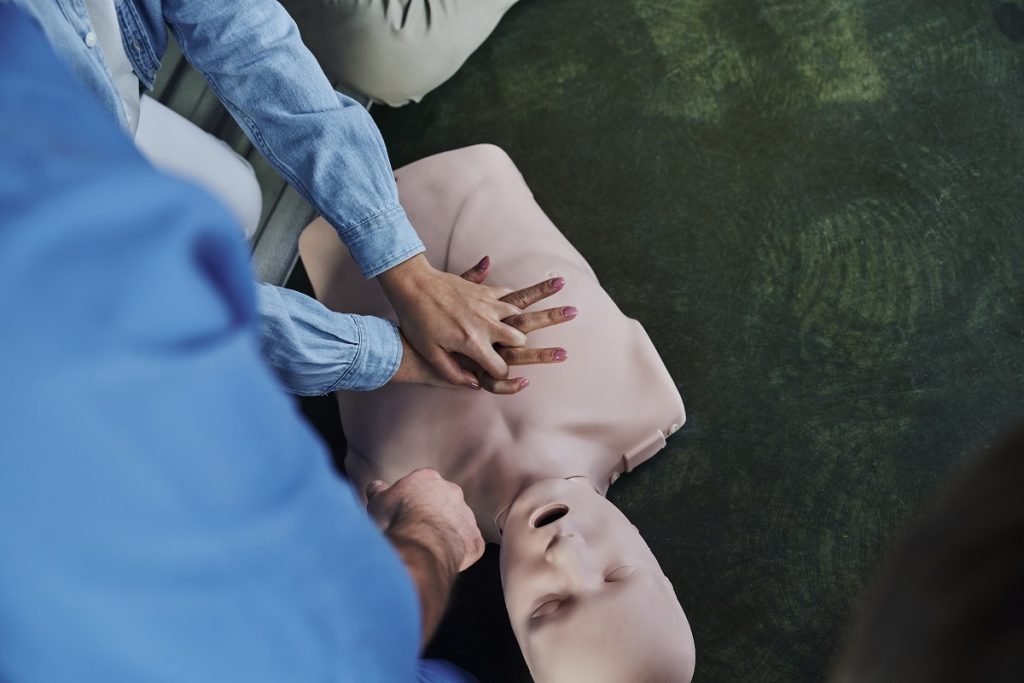
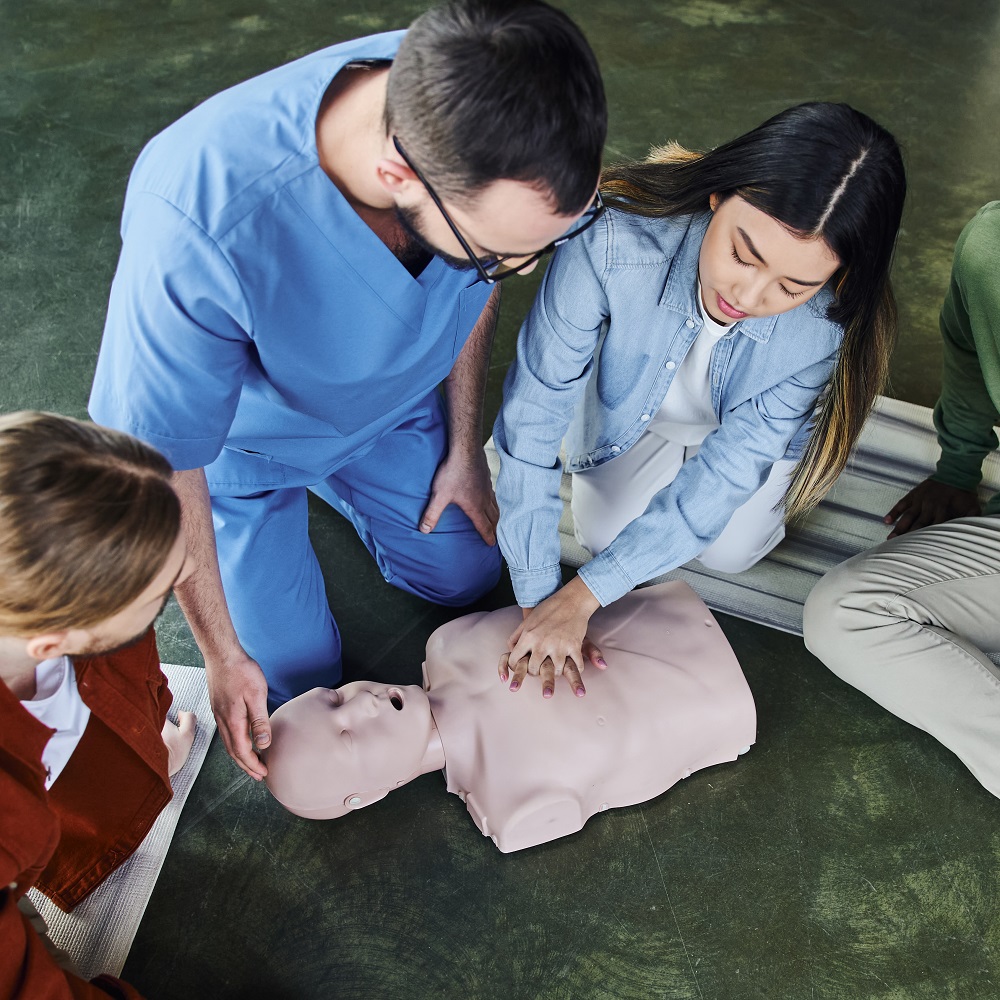
Experts preserve energy and depth by mastering body leverage. Instead of using arm strength, they align shoulders directly over the patient’s chest, keep elbows locked, and let gravity do most of the work. This reduces fatigue and keeps compressions consistent even several minutes into the cycle.
3. Using Controlled Micro-Pauses Strategically
An untrained rescuer pauses too often; an expert uses micro-pauses—brief, deliberate adjustments that maintain rhythm while allowing for tiny rest intervals or compressor switches. These movements are seamless and barely noticeable, preventing performance drop-off without breaking the compression cycle.
4. Adjusting to Environment and Equipment
Surfaces matter. Professionals know how to reposition patients on firm surfaces, how to compensate for soft bedding in hospitals, and how to use feedback devices or backboards to maintain force transfer. They also understand the effect of PPE or gloves on tactile feedback and adjust accordingly.
5. Managing Fatigue Without Losing Form
One of the biggest threats to CPR quality is exhaustion. Trained rescuers monitor their own performance, switching roles before quality drops. Experts also develop breathing control and muscle coordination to avoid early fatigue — similar to an athlete maintaining form during endurance performance.
6. Recognizing When CPR Alone Isn’t Enough
Mastery includes knowing when to transition. Experts stay alert for signs of rhythm change, breathing return, or AED prompts, ensuring no time is lost moving to the next stage of intervention. They treat CPR as part of a continuous chain of survival, not an isolated skill.
A study revealed by RQI Partners shows how frequent, feedback-based training for the five components of high-quality CPR maintains skill competence over time.
Tools and Training Aids That Improve CPR Performance
The best CPR training adds measurement and feedback to every practice cycle so skills become reliable under stress. Here’s how top programs sharpen performance beyond the basics:
-
- Real-time compression feedback
Sensor-equipped manikins or compression “pucks” display rate, depth, and recoil on a screen. Trainees correct form instantly instead of waiting for an end-of-session critique.
- Real-time compression feedback
-
- Metronome and audio coaching
A steady beat around 110 BPM supports the target 100–120 compressions per minute. Devices that cue “push harder,” “release fully,” or “resume compressions” reduce drift and keep hands-off time low.
- Metronome and audio coaching
-
- Chest compression fraction tracking
Timers and dashboards show what percentage of each minute is spent compressing. Seeing this number nudges teams to tighten role switches and minimize pauses.
- Chest compression fraction tracking
-
- Structured ventilation practice
Bag-mask drills with visible chest rise markers and pressure-limiting valves help learners deliver just enough air, avoiding over-ventilation that can reduce blood flow.
- Structured ventilation practice
-
- AED integration from minute one
Scenarios start with the AED in reach so learners build the habit of early pad placement, rhythm analysis, and shock delivery—without losing compression momentum.
- AED integration from minute one
-
- Short, frequent refreshers
Quarterly micro-sessions keep skills from fading. Brief, focused drills (5–10 minutes) are more effective than waiting a year for recertification.
- Short, frequent refreshers
-
- Post-scenario debrief with data
Immediately reviewing graphs of rate, depth, recoil, and pauses turns each scenario into a precise coaching moment and accelerates improvement.
- Post-scenario debrief with data
A study shows that structured practice with clear milestones helps learners maintain correct CPR steps and apply them faster during real emergencies.
Team CPR Dynamics: Maintaining Quality Under Pressure
High outcomes don’t happen from effort alone—they come from clear roles, tight communication, and relentless focus on the components of high quality CPR. In real events, teams that decide fast, switch smoothly, and protect compression time keep perfusion up while adding airway support, defibrillation, and monitoring. This section turns individual skill into coordinated action that fits naturally with BLS/ACLS/PALS models.
Core Roles and What “Good” Looks Like
-
- Team Leader — Sets priorities, assigns roles, calls switches at 2 minutes, guards hands-off time.
-
- Compressor — Depth 5–6 cm in adults, rate 100–120/min, full recoil, rapid swap when cued.
-
- Airway/BVM — Jaw thrust, good seal, 1-second breaths with visible rise, avoids over-ventilation.
-
- AED/Defib — Pads on within the first minute available, charge during compressions, shock on command with <10s pause.
-
- Timekeeper/Recorder — Tracks cycles, meds (if within scope), rhythm checks, and announces switch points.
One-Minute Huddle Script (when the team arrives)
“You compress. You bag. You manage AED. I lead. Switch in two minutes. Minimize pauses. Call out depth/rate/recoil if they drift.”
Communication Cues That Hold Quality
-
- “Compressions continue while pads go on.”
-
- “Charge during compressions—clear only to shock.”
-
- “Switch in 3…2…1—resume.”
-
- “Small breaths, visible rise only.”
-
- “Pause <10 seconds—check rhythm—resume.”
Rotation and Fatigue Plan
-
- Switch compressor every 2 minutes or sooner if rate/depth slip.
-
- Pre-assign the next compressor; they stand ready at the shoulder to cut the switch to seconds.
High-Yield Checks at Each Rhythm Analysis
-
- Before pause: “Charging… continuing compressions.”
-
- During pause (<10s): rhythm + pulse if indicated.
-
- After: immediate compressions; announce new cycle start time.
First 4 Minutes, Role-by-Role
| Time | Leader | Compressor | Airway | AED/Defib | Recorder |
| 0:00–0:30 | Assign roles, confirm unresponsive/no normal breathing | Start compressions | Prepare BVM, opens airway | Power on, prep pads | Start timer |
| 0:30–1:00 | Cue “pads on during compressions” | Maintain 100–120/min | Test seal, ready breaths | Pads on while compressions continue | Log start |
| 1:00–2:00 | Cue “charge during compressions” | Maintain depth/recoil | 30:2 or per local protocol | Charge; announce “clear—shock” | Track cycle |
| 2:00–2:10 | Announce switch, <10s pause for rhythm/shock | Swap to standby compressor | Deliver breath only if indicated | Shock if advised | Mark switch |
| 2:10–4:00 | Reaffirm priorities; prep next switch | Resume compressions immediately | Continue controlled breaths | Reassess readiness | Log events |
How This Improves the Components of High Quality CPR
-
- Depth & Rate: early switch + coaching prevents drift.
-
- Full Recoil: airway/recorder call out recoil if elbows bend.
-
- Minimal Interruptions: charge during compressions; pre-briefed switches.
-
- Effective Ventilation: one-second breaths with visible rise only, avoiding over-ventilation.
The Real Impact of CPR Training: What Data and Experience Reveal
Behind every statistic about cardiac arrest survival, there’s a story of timing, technique, and teamwork. CPR training doesn’t just teach compressions—it develops decision-making under pressure, situational awareness, and clinical judgment. The impact extends well beyond first response; it shapes how healthcare providers and lay rescuers think in crises.
Studies consistently show that high-quality CPR, paired with structured refreshers, increases both survival rates and neurological recovery. Trainees who practice with measurable goals—depth, rate, and recoil feedback—perform CPR correctly nearly twice as often as those who train without them. This is where hands-on experience and repetition build confidence that online reading alone cannot.
In healthcare settings, this mastery translates into improved skills for nurses, prioritizing patients in emergencies, and smoother coordination among teams during code situations. Those trained to maintain rhythm and minimize pauses can integrate CPR seamlessly with defibrillation, airway management, and medication support—keeping every second purposeful.
Comfi-Kare CPR offers specialized training programs that focus on mastering the components of high quality CPR through realistic simulations, professional instruction, and evidence-based practice—helping participants build lasting confidence and readiness for real-life emergencies.
Conclusion
Mastering CPR is more than a certification—it’s a commitment to readiness. Every compression, breath, and decision can influence the outcome of a life in crisis. Understanding and applying the components of high quality CPR ensures that your actions aren’t just well-intentioned, but truly effective. Whether you’re a healthcare professional or a concerned citizen, consistent training and practice are what turn knowledge into reliable skill.
At Comfi-Kare CPR, our certified courses provide hands-on instruction, real-time feedback, and scenario-based learning that help you perform CPR with confidence and precision. From basic CPR to advanced BLS, ACLS, and PALS programs, our team prepares you to respond with calm, clarity, and technical excellence.
Contact Comfi-Kare CPR today to enroll in a course and start building the confidence that comes from mastering the components of high quality CPR—because the best time to be prepared is before an emergency happens.
Frequently Asked Questions about Components of High Quality CPR
When to Perform CPR?
CPR should be performed immediately when a person is unresponsive and not breathing normally. Quick action within the first few minutes can double or even triple the chances of survival, especially before emergency medical help arrives. This immediate resuscitation effort, combined with consistent compressions and effective breath delivery, helps maintain oxygen flow to vital organs until advanced care takes over.
What are the components of high-quality CPR?
The components of high quality CPR include proper compression depth, complete chest recoil, consistent rate, minimal interruptions, and effective ventilation. Together, these elements form the foundation of effective cardiopulmonary rescue, keeping blood and oxygen circulating to vital organs until advanced care is available.
How Many Compressions per Minute for CPR?
The recommended compression rate is 100 to 120 compressions per minute for adults, children, and infants. Maintaining this pace helps sustain adequate circulation without tiring the rescuer too quickly.
How Long Should You Check for Breathing While Performing CPR?
Before starting CPR, check for breathing for no more than 10 seconds. If the person isn’t breathing or only gasping, begin compressions immediately to avoid losing valuable time.
What is the most important element in administering CPR?
The most critical element is maintaining high-quality chest compressions—deep, consistent, and with full recoil. Effective compressions are the foundation of CPR and have the greatest impact on survival.